

Introducing Early Quakers — Episode 3: Margaret Fell
Episode 3 Summary
Margaret Fell became convinced of the Quaker message after meeting George Fox, and soon her home, Swarthmoor Hall, became a center for the growing movement. Episode 3 looks at her practical leadership, her support for imprisoned Friends, and her strong defense of women’s ministry. Her work helped shape the early organisation and direction of Quakerism.
Show Credits
Presented by: Silver Wattle Quaker Centre
Written and Narrated by: Michael Corbett
Introductions Read by: Ann Zubrick, Board Member, Silver Wattle
Produced and Edited by: Holly Dhynes, Quakers Australia
Based on materials originally developed by: Michael Corbett, with gratitude to David Johnson
Produced on Ngambri–Ngunnawal land, near Weereewa (Lake George), where Silver Wattle Quaker Centre is located. This series includes contributions from Friends across Australia and around the world.
Music: Classical Guitar by Mantikore (licensed from AudioJungle)
Website: https://silverwattle.org.au/podcast
Explore the series on these platforms
-
Transcript for Episode 3: Margaret Fell
A brief introduction to Margaret Fell, 1614 - 1702
Ann:
Welcome to this podcast series coming courtesy of Silver Wattle Quaker Centre, located in central New South Wales on the edge of Werriwa or Lake George, the largest freshwater lake in Australia. We acknowledge and give thanks for First Nations groups’ care of Country. We commit to its ongoing care.
I’m Ann Zubrick, a member of the Silver Wattle Board.
In October 2023, Michael Corbett, a Queensland Quaker, attended a course at SW exploring the lives of remarkable men and women in the latter part of the 17th century who became early Quakers. He subsequently compiled these stories to share in nine podcast episodes.
We hope these stories inspire and inform you. You can explore more about Silver Wattle’s retreats and learning opportunities — both in-person and online — at silverwattle.org.au.
Here is Introducing Early Quakers: Episode 3 – A brief introduction to Margaret Fell, 1614 - 1702, narrated by Michael Corbett.
Michael:
A brief introduction to Margaret Fell, 1614 - 1702
Margaret Fell was born in the parish of Kirkby, Lancashire and her early life was uneventful until the age of 18, when she married Thomas Fell who was 16 years older than her. Thomas was a Barrister, then became a Justice of the Peace and a member of Parliament, going on to be the Lord Chief Justice. Their home was a very large house on the estate of Swarthmoor Hall, with a collection of orchards, land for farming, vegetable gardens and stables with many employees. Thomas was a ‘man of substance’, both in the legal and social sense. Margaret who raised 7daughters and 1 son was very capable of running the estate during her husband’s absences from home due to him attending Assizes in various counties. There is no doubt the family were devout followers of the Church and led daily evening prayers ‘above stairs’ while the servants held their prayers ‘below stairs’ They also had a private chapel, which would be used by any priest that were passing Swarthmoor Hall in their travels.
In June 1652 Justice Fell was at the Assizes in Wales whilst George Fox was on his evangelical travels around the Midland of England. During a violent storm Fox sought shelter at the Fell estate and as it was late, he was offered a meal, joined in evening prayers and was offered a room to sleep. Margaret later wrote to George ‘opened us a book that we had never read in, nor indeed had ever heard at it was our duty to read it in the Light of Christ in our consciences’. Days later she invited George to attend the parish church with them; he came in after the singing and asked if he could speak and many were moved by his message. Over the next few weeks despite her misgivings and not able to understand why, she was struck by his presence, moved by his preachings and his testimony of the inner light that she became ‘convinced’ - as did her daughters and many of the servants. When Justice Fell returned home, he accepted his wife’s commitment and supported her and their children, along with many who worked on the estate. Slowly but surely over the next 6 or so years Swarthmoor Hall became the centre of the Quaker movement. Through Margaret’s efforts, money was raised for helping those Friends who were in prison, sending letters requesting release of Friends and collecting clothing. After one severe beating George went to Swarthmoor to find Margaret, her daughters and women of the household busy dressing the wounds of many people who had suffered at the hands of the mob. Many Friends were being sent to prison for preaching in the town, not going to church, not removing hats in court, and later the refusal to swear an oath. Margaret was distressed by this and started visiting the local jails to support those early Friends. She became aware of the dreadful condition of the jails and the fact that children were also sent to prison. She was able to use the fact that her husband was Chief Justice Fell to gain entry to the jails, offering prayers and pastoral care, as well as practical help. She once visited a man convicted of poaching and he had one hand cut off - so she gave him a glove and a mitten. Another time she was visiting a young child who had been sentenced to the gallows and during prayers with him, received a message ‘that all he has is thee’, and so accompanied him to the gallows.
As our movement grew, so did Margaret’s work, serving as unofficial secretary by receiving and sending letters to the roving missionaries and preachers in a group called ‘The Valiant Sixty’ [there were at least 67 - then they stopped counting] and also collecting and disbursing funds to those on missions.
Margaret also started to write to distant Meetings asking for news of ‘those in your meeting who have died and those in prison; and in 1653 she wrote ‘this meeting has a concern about those who find themselves imprisoned for Truth’s sake’ and was signed ‘Margaret Fell, Recording Clerk’ - the first recorded use of that term. It was Margaret, with divine assistance, started to organise and create the structure that we know today, allowing others in the ‘Valiant Sixty’ to spread the Quaker Message. She was a prolific writer of letters, epistles, pamphlets and books, many of which are in the archives of Friends House in London.
In writing a letter to Oliver Cromwell, she spoke truth to power’, addressing him with the term ‘Dear Heart’ instead of his title, asking for Friends to be released from jail. She also went to London to see Cromwell face to face, by which time he was used to George Fox, as well as Margaret, interceding on behalf of the many imprisoned Friends and became quite sympathetic to their requests but as the Dictator/Lord Protector, was not always able to release them all. Cromwell died in 1658 and in 1660 with the restoration of monarchy, Charles II came to the throne. She continued writing to King Charles and went to London to meet with the King 5 times, pleading the release of prisoners ‘who were people of peace’ - not plotting against the King. The declaration made to him that ‘we do utterly deny, with all outward wars and strife, and fighting with outward weapons........this is our testimony to the whole world’ became our Peace Testimony and one of the most well-known facts about Quakers.
Chief Justice Fell died in 1658, leaving Margaret vulnerable to her detractors. In February 1664 Margaret was arrested and because she refused to swear an oath and allowing Quaker Meetings in her house, her defence being as long as the Lord blessed her with a house, she would worship Him in it. She was imprisoned for 6 months in Lancaster Jail, later the same year she was given a life sentence and forfeiture of her property because she also refused to take an oath of allegiance. She remained in prison until 1668 and spent most of her time in jail writing religious pamphlets, epistles and letters. One of her works is “Women’s Speaking Justified” a scripture-based argument for women’s ministry, basing her argument for equality of the sexes on one of the basic Quaker premises - namely spiritual equality. Her daughters were concerned for their mother, they and others consulted with lawyers and petitioned the King and eventually Margaret was released by order of the King and council. In 1669, Margaret and George Fox were married. On returning to Lancashire after her marriage, she was sent to prison again for about 1 year for breaking the act that forbids any person from any religious assembly, other than the Church of England that came into effect in 1670 and was not repealed until 1812. Shortly after his marriage to Margaret, George departed on a religious mission to America from 1671-3. Margaret continued her work organising Friends into a cohesive group, and with her daughters as ‘secretaries’, by writing letters, epistles and books and also travelled around England visiting Meetings.
After the death of Charles II in 1685, Margaret went to London to meet with King James II, and shortly after a number of Friends were released from jail. She had gone to London 10 times, pleading with Kings and Dictator/Protector for jailed Friends but also giving the strong message of Peace and not trying to overturn governments. Her last journey to London was at the age of 83. She outlived her husbands and died aged nearly 88 at Swarthmoor Hall.
Apart from all the books and letters she wrote, she is also remembered as the ‘Mother of Quakers’. Each time, anywhere in the world that there is a Quaker Meeting for Business - remember that Margaret was the first Clerk, and we carry on the traditions that she and others started.
Margaret Fell wrote:
God hath put no such difference between Male and Female as man would make.
────────────
And if you love the light, then you come to the light to be proved, and tried whether your works be wrought in God. But that which hates the light, turns from the light, and that shall be condemned by the light forever.
────────────
The truth is one and the same always, and though the ages and generations pass away, and one generation goes and another comes, yet the word and power and spirit of the living God endures forever and is the same and never changes.
────────────
And so, abide in the light, which discovers all your Words, Thoughts and Actions, this which makes them manifest to you is the Light. And so, wait in the Light, and you will come to know and see the cross of Christ, which is the power of God unto Salvation, which is foolishness unto the world, but unto them that believe, it is the Power of God and Wisdom of God. ...........So, when you meet together, wait in silence upon the Lord, that you may come to know the invisible Virtue and Life which comes from the living God...........And so the Lord God keep you single in your Measures up to himself, that in the Spirit ye may wait, to worship him in Spirit, who is a spirit.
────────────
In a letter sent to Charles II in 1660, Margaret wrote.
We are a people that follow after those things that make for peace, love and unity; it is our desire that others’ feet may walk in the same, and do deny and bear our testimony against all strife, and wars, and contentions that come from the lusts that war in members, that war in the soul, which we wait for, and watch for in all people, and love and desire the good of all. Treason, treachery, and false dealing we do utterly deny; false dealing, surmising, or plotting against any creature upon the face of the earth, and speak the truth in plainness, and singleness of heart.
Ann:
Thank you for listening to this first podcast series from Silver Wattle Quaker Centre.
We hope these stories have sparked reflection and a deeper appreciation for the courage and spiritual depth of early Friends.
If you'd like to explore Quaker spiritual practices or join us for a retreat or course — either in person or online — visit silverwattle.org.au.
Acknowledgment
This podcast episode was created under a sense of Leading, and I wish to acknowledge the sources that informed its development. I acknowledge the works of David Johnson, and have used info from Wikipedia, Britain YM Handbook, The Valiant Sixty by Ernest Taylor, and The Peaceable Kingdom by Jan De Hartog.
-
Episode 3: Margaret Fell
DISCUSSION QUESTIONS
Margaret Fell’s Life & Leadership
How did Margaret Fell’s social position and her management of Swarthmoor Hall prepare her for what she later took on for the early Quaker movement?
What stands out to you about her courage and resilience? What does this suggest about the cost of spiritual conviction in her time?
Spiritual Insights
What might Margaret have meant when she wrote that George Fox “opened us a book we had never read in”?
Margaret’s writings emphasise abiding in the Light, spiritual equality, and worship in silence. How do her words resonate (or challenge) your own understanding of Quaker spirituality today?
Speaking Truth to Power
Margaret addressed Oliver Cromwell as “Dear Heart” and met with Charles II and James II multiple times. What does her approach tell us about Quaker understandings of power and persuasion?
How did Margaret Fell’s 1660 declaration of peace shape the Quaker Peace Testimony as we know it, and what parallels do you see with Quaker activism today?
Legacy & Women’s Ministry
Margaret is often remembered as the “Mother of Quakers” and the first Recording Clerk. How do you see her administrative and organisational work influencing Quaker practice and business meetings now?
Her pamphlet Women’s Speaking Justified offered a biblical case for women’s ministry. How does her message about spiritual equality relate to current discussions about gender and leadership in faith communities?Use these discussion questions in your group or Meeting – 📄Download the PDF
Small Groups

We’ve created a printable PDF with thoughtful discussion questions designed for use in small groups or worship-sharing settings. You’re warmly invited to download and share it with your Meeting or group as you explore the lives and faith of early Friends.
Download Discussion Questions (PDF)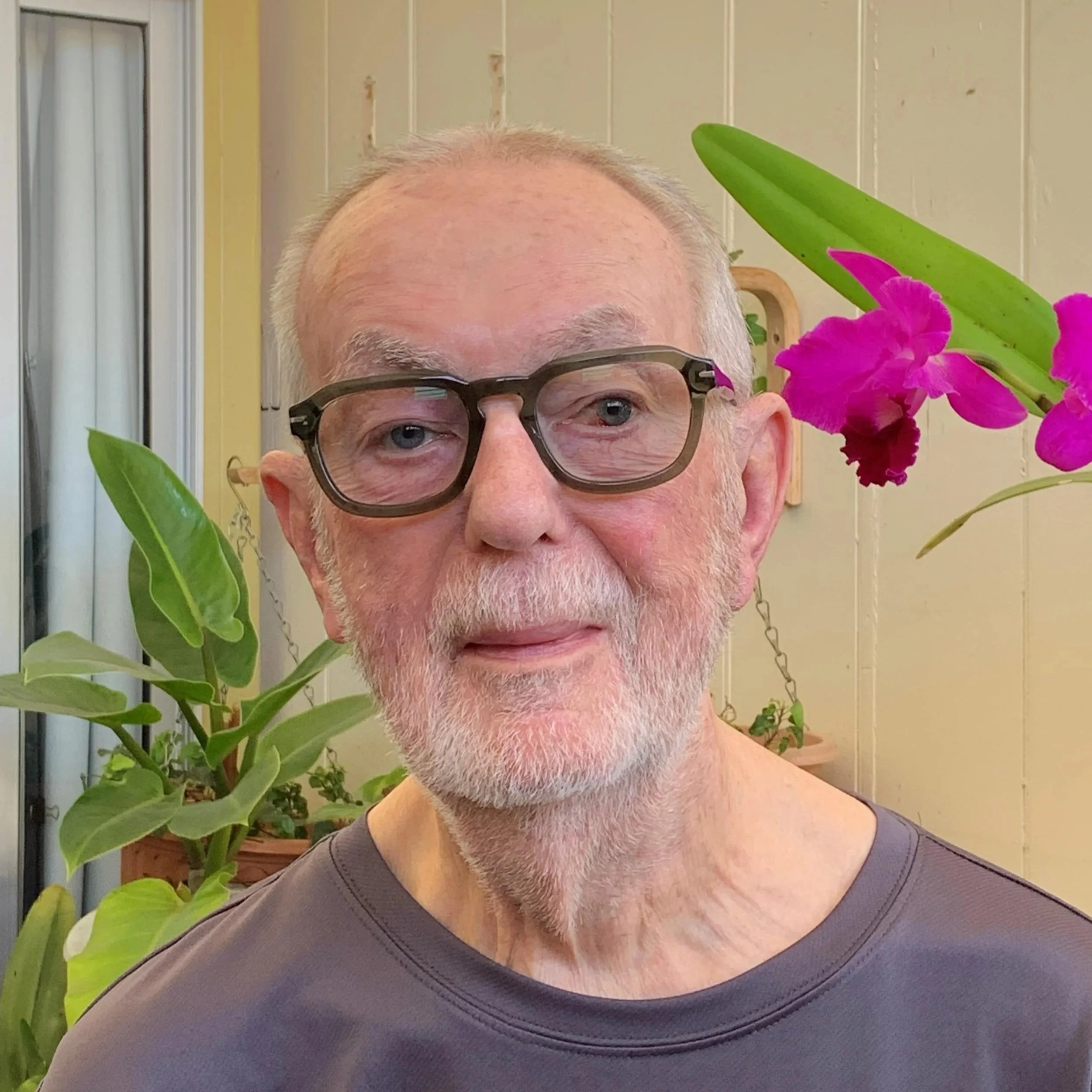
Michael Corbett
Writer and Voice of the Series

Ann Zubrick
Voice of the Series Opening
Share the Word
This series is free to use and share widely. Please help us spread the word among Friends and seekers by sharing the SoundCloud link, this page,